
Service Overview
What is Pediatric Occupational Therapy?
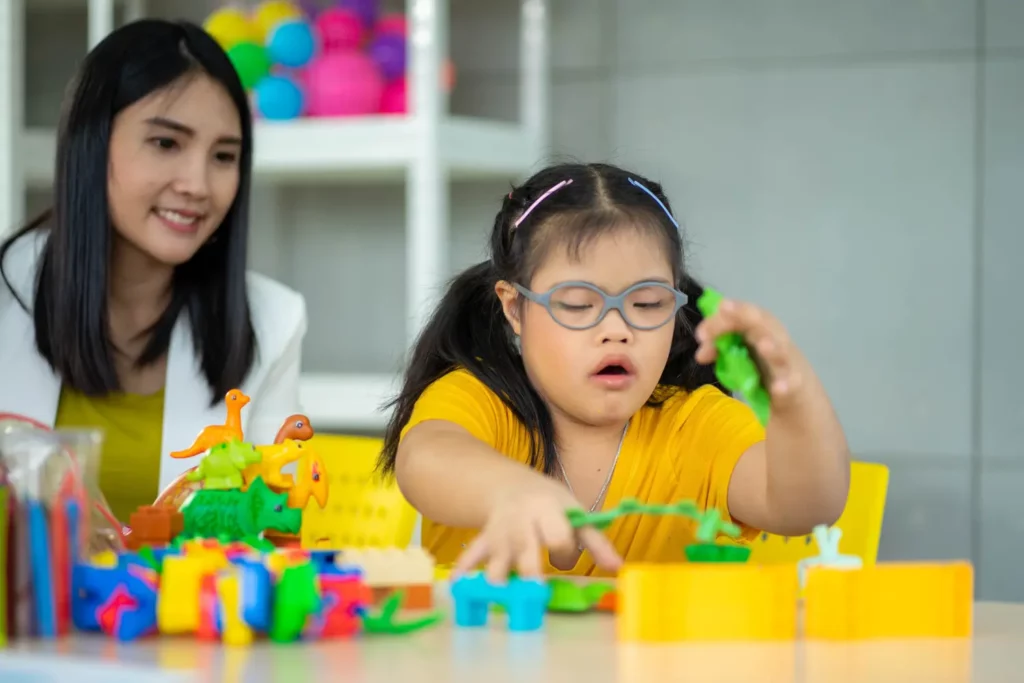
Occupational therapy (OT) is a regulated healthcare profession that enables individuals to achieve their optimum ability to engage children in everyday activities. A child’s occupation is to continually develop a range of new skills through engagement in play, self-care, social and academic activities.
Pediatric Occupational Therapists help to enhance skill development and quality of life for children who experience motor, sensory, learning, social, and behavioural challenges.
Occupational therapists at our Symbiosis clinics, with their unique combination of skills, are well-positioned to support parents and educators in problem-solving to enhance the quality of life for all children.
When a child begins Occupational Therapy services at Symbiosis, the therapist will do an assessment to determine the possible goals for treatment. Once the assessment has been completed, the therapist will explain the results and will suggest the treatment goals. They will also discuss the ideal treatment schedule with the family.
Our Team
Occupational Therapy Team
Our pediatric occupational therapy team brings strong expertise in the Sensory-motor approach, using proven therapy models(for example, sensory integration) to support self-regulation, social interaction, and social thinking skills in children, with or without a formal diagnosis. They also specialize in addressing feeding and swallowing difficulties linked to sensory, motor, and behavioral challenges. Each session includes structured home practice and parent/caregiver coaching to ensure skills carry over beyond therapy and generalize effectively across home, school, and community settings.

Focus Areas
Areas of Intervention
Precision, coordination, strength, and balance are honed through targeted interventions, fostering a foundation for your child's future success
Independence in self-care, attention, and focus is cultivated, empowering your child beyond therapy to be a more confident and capable individual
Structured interventions equip your child with tools for effective organization, establishing order and structure for various aspects of life
Emotional control, social interaction proficiency, and positive relationships are developed through interventions focused on self-regulation and social skills
Crucial sleep hygiene habits for overall well-being are established with our guidance and strategies, ensuring restful nights for your child
We empower your child with additional means for daily activities through prescribed assistive tools and technology solutions
We recommend equipment and modify your surroundings with adaptive solutions, creating a supportive space for your child to thrive in their daily environment
We focus on essential skills development for a smooth transition into vocational pursuits, laying the groundwork for your child's successful future.
Precision, coordination, strength, and balance are honed through targeted interventions, fostering a foundation for your child's future success
Independence in self-care, attention, and focus is cultivated, empowering your child beyond therapy to be a more confident and capable individual
Structured interventions equip your child with tools for effective organization, establishing order and structure for various aspects of life
Emotional control, social interaction proficiency, and positive relationships are developed through interventions focused on self-regulation and social skills
Crucial sleep hygiene habits for overall well-being are established with our guidance and strategies, ensuring restful nights for your child
We empower your child with additional means for daily activities through prescribed assistive tools and technology solutions
We recommend equipment and modify your surroundings with adaptive solutions, creating a supportive space for your child to thrive in their daily environment
We focus on essential skills development for a smooth transition into vocational pursuits, laying the groundwork for your child's successful future.
Curriculum and Schedule
Diagnoses We Address

Learning Disabilities
Autism Spectrum Disorder (ASD)
Developmental Coordination Disorders (DCD)
Attention Deficit Hyperactivity Disorder (ADHD)
Anxiety Disorders
Organisation, time management and emotional control
Self regulation skills
Self regulation skills
Executive function skills
Gross and fine motor skills
Handwriting difficulties
Sensory processing and modulation challenges
Focusing, attention and transitions
Learning Disabilities
Autism Spectrum Disorder (ASD)
Developmental Coordination Disorders (DCD)
Attention Deficit Hyperactivity Disorder (ADHD)
Anxiety Disorders
Organisation, time management and emotional control

Self regulation skills
Self regulation skills
Executive function skills
Gross and fine motor skills
Handwriting difficulties
Sensory processing and modulation challenges
Focusing, attention and transitions
Program Focus
General Areas Pediatric Occupational Therapist Focuses On
Children may face difficulties in using classroom supplies such as pencils, crayons, erasers, glue sticks, etc. They may also find it challenging to manage fasteners such as buttons, zippers, and laces. Their small hand muscles may not have the strength and coordination that is needed for those tasks.
An Occupational Therapist utilizes the knowledge of anatomy, biomechanics, and neurology to understand the missing components that may be hampering the development of a child’s hand functions. Through various therapeutic activities, the child’s hands can get stronger and more coordinated, thus allowing him to experience greater mastery, increased skill, and independence.
Children may show some delays in achieving gross motor milestones like crawling, walking, running, catching, and throwing, or simple jumping activities. These challenges later make it difficult for them to keep up with their peers. These children may avoid the playground, physical games, or sports that other children their age find highly rewarding.
An Occupational Therapist (OT) is the appropriate professional to address the child’s needs in this area. Please call our office to discuss what services can be provided by us to support your child.
Some children have significant difficulty with eating. They either eat a very limited repertoire of foods and/or gag very easily when trying new foods. These children are often referred to as picky eaters.
Our therapists take a complete history of those foods that the children will eat including but not limited to taking note of the various temperatures, colors, and textures the child will tolerate.
Treatment for these children focuses on the sensory system that may be oversensitive and incorporates experiences with total body exploration as well as oral exploration. New foods are incrementally introduced following a protocol of what is more likely to be tolerated.
Handwriting skills from the basics of letter formation to taking class notes legibly can be extremely difficult for some children to learn. Occupational Therapists uncover the underlying causes of a child’s difficulty in this area. The child may have weakness, coordination deficits, sensory limitations that do not allow easy control of the pencil, visual tracking deficits, or motor planning limitations.
Occupational Therapists use a multi-sensory approach to handwriting remediation that is based on the foundations of hand anatomy, biomechanics, and sensory functioning. OTs are familiar with the handwriting programs that are often utilized in the school district and can be the expert you need to maximize their effectiveness.
From stacking blocks and doing puzzles to writing letters appropriately, a child must be able to perceive differences and relationships between objects in the environment.
Occupational Therapists help children discover these relationships and begin a map of the spatial planning that is required to function in our world. All skills are learned through play as children are provided with therapeutic experiences that progress from simple to complex.
Through Occupational Therapy treatment improvements have been reported by parents in a child’s handwriting, organizational skills, play skills, and school performance.
FAQ
Frequently Asked Questions
Is Occupational Therapy Covered in BC?
In British Columbia, families may access funding for occupational therapy through
- Autism Funding (for eligible children)
- At Home funding
- Funding from Home School Associations
- Variety Children’s charity fund
- First Nations funds
- Extended health insurance plans
- Private pay options
Our team can guide you through available funding options and help you maximize your benefits.
Who can benefit from occupational therapy?
Individuals of all ages who experience challenges in activities of daily living, motor coordination, sensory processing, or functional independence can benefit from occupational therapy.
What is the OT approach at Symbiosis Pediatric Therapy
Occupational therapy interventions may include sensory integration therapy, fine motor exercises, activities of daily living (ADL) training, assistive technology recommendations, environmental modifications, and sensory-based interventions to address individual goals and needs.Symbiosis OT approach comprises of the following:
- Play-based therapy that keeps children engaged
- Sensory gym environment for hands-on learning
- Parent coaching so progress continues at home
- Goal-focused plans tied to real-life outcomes
- Culturally responsive care for diverse BC families
We not only work with children but also partner with their families.
We Are Here for You
Book a consultation today, let’s create a customized plan for your child’s growth